blog
Out with the old, in with the real
The Bonnodog transition guide
Changing your dog's food might seem like a simple swap, but if you’ve been serving up processed factory crunchies or mystery tinned meat, their tummy might need a minute to adjust to actual, real food. Whether your pup is graduating from puppyhood, managing a sensitive stomach, or you’re finally unleashing them from their "cardboard kibble prison," the secret to a happy dog (and a clean carpet) is a slow, steady transition.
In this article
- Why a slow transition is essential
- The Bonnodog 5-day transition plan
- Pro tips for serving fresh
- Helping fussy eaters and managing speedbumps
Why a slow transition is essential
Your dog’s gut is home to a massive community of microbes—their microbiome—that helps them digest their food. These microbes get used to whatever brown balls or "paté of sadness" you’ve been serving up. When you suddenly introduce fresh Aussie meat and rescued veggies, that delicate balance can get a bit wonky.
A gradual introduction gives the gut microbiome time to adjust, allowing the "good bacteria" to thrive on our nutrient-packed, gently cooked recipes.
The 5-day transition plan: a step-by-step guide
To keep the tail-wags coming and the tummy rumbles away, we recommend a 5-day switch. While some dogs have an "iron gut," it’s always better to be safe than sorry—especially when cleaning the rug is the alternative.
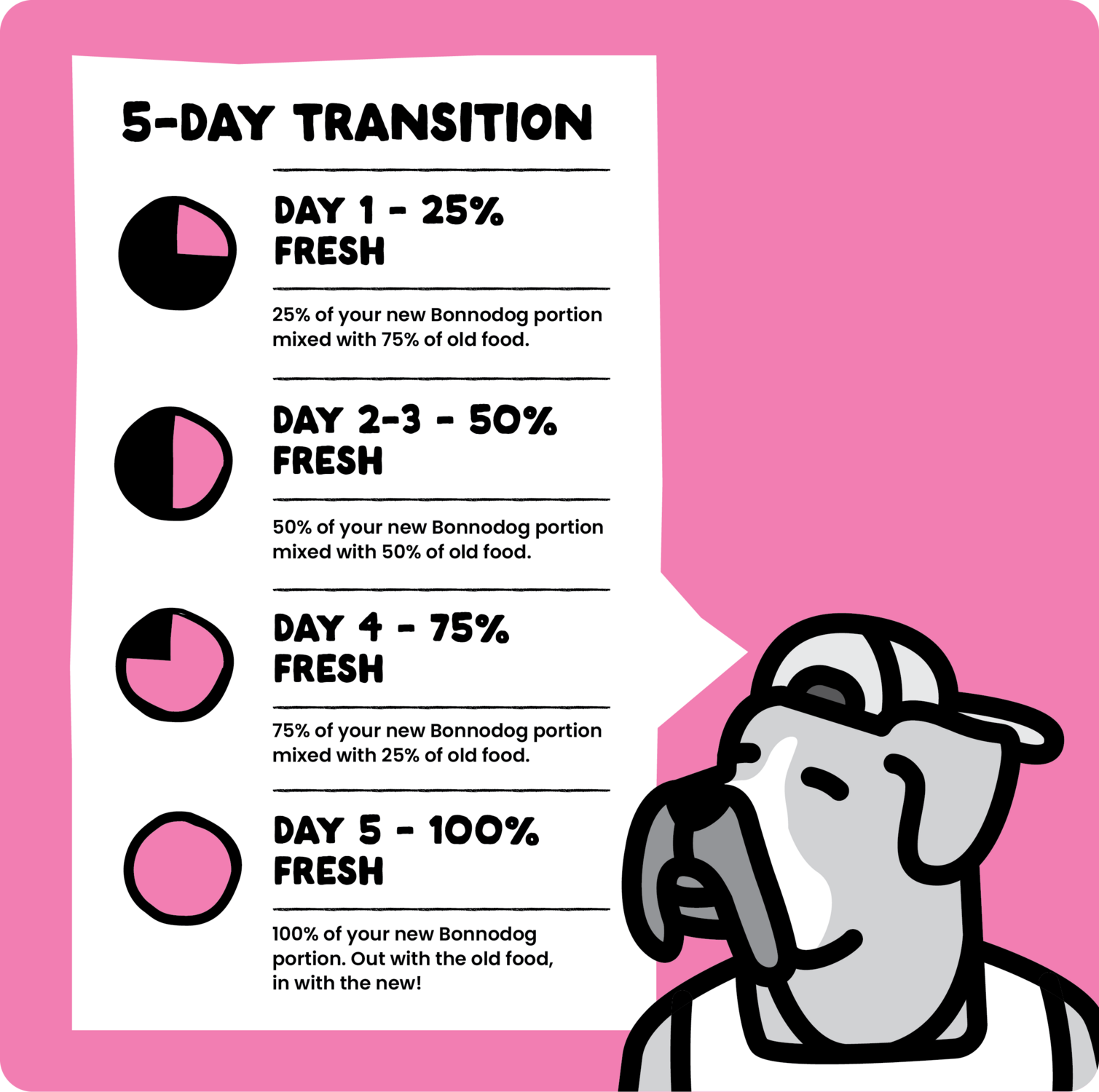
- Day 1: 25% Fresh Mix 25% of the new Bonnodog portion with 75% of their old food.
- Day 2-3: 50% Fresh A half-and-half split of Bonnodog and the old stuff.
- Day 4: 75% Fresh Mostly Bonnodog now, with just 25% of the old food left.
- Day 5: 100% Fresh Out with the old, in with the real! Your dog is now officially a Bonnodogger.
Vet tip: Mix the food thoroughly. Clever pooches are notorious for picking out the old, familiar bits and leaving the fresh goodness behind.
Pro tips for serving fresh
Because Bonnodog is real food, not highly processed pellets, it requires a little "dog-park common sense" for the best experience:
- Make freezer space: Our pouches arrive frozen to lock in the goodness, so clear a spot before your box lands.
- Defrost right: Thaw overnight in the fridge, or if you're in a hurry, speed it up in a bowl of warm water.
- Coming off kibble? Try softening the old kibble with a little water or bone broth a few days before you start the switch. It helps your dog adjust to the change in moisture and texture.
- Serving time: Serve it straight from the fridge or gently warmed in the microwave—just always check the temp with your finger first.
Helping fussy eaters and managing speedbumps
It’s normal for some canine characters to be a bit suspicious of something that actually looks and smells like food.
- Use their nose: Warming the food slightly releases the aroma of the fresh Aussie meat, making it much more inviting.
- Stay calm: Dogs pick up on our energy. If you’re stressed about the switch, they’ll be suspicious. Stay relaxed, and they’ll feel more confident diving in.
- The "gut helper": For dogs with extra sensitive tummies, using a prebiotic "gut helper" during the transition can provide extra support for digestive health and stool quality. We recommend Instinctive Bite Digestive Health Powder for Dogs.
What to watch for
- Good signs: A healthy appetite, normal energy (look out for those zoomies!), and firm, well-formed stools.
- Warning signs: If your dog has persistent diarrhoea or vomits, stop the transition and go back to the old food for a few days until their tummy settles. If things don't improve, it’s always best to have a chat with your vet.
Changing to a fresh diet doesn't have to be hard. By taking it slow, you’re giving your bestie the simple nutrition they need for a long, healthy life.
And remember, if they don’t devour it, our clean bowl guarantee has you covered.
